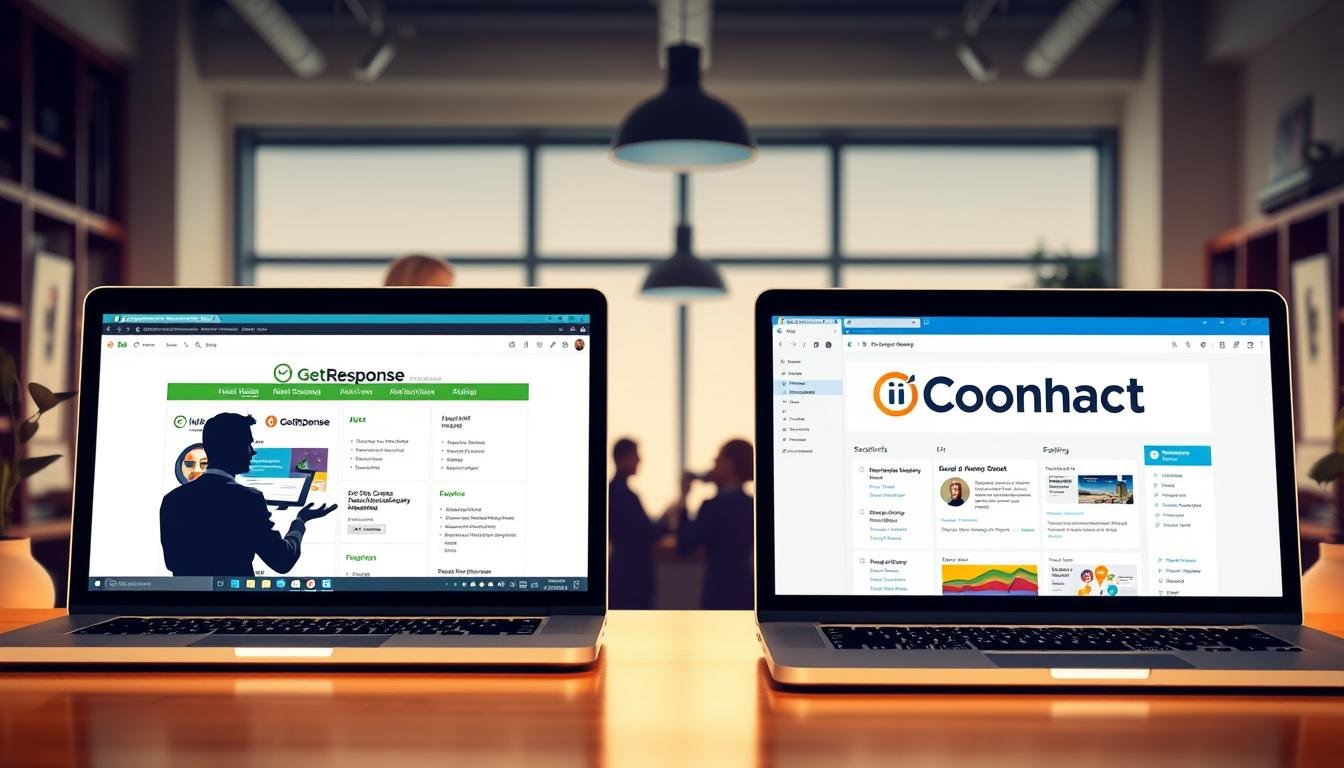
Which email platform will actually help you raise more donations and sign up more volunteers without driving your team crazy?
You rely on email and marketing tools to mobilize supporters. This guide compares two leading providers built for organizations that need dependable email marketing, integration with CRMs, and clear pricing as contacts grow.
The first option highlights no-contract plans, 500+ templates, strong automation and webinar tools, and published tiered pricing that scales by contacts. The second leans on nonprofit discounts, social integrations, live chat support, and a trial that routes many buyers to sales for larger quotes.
We also flag practical trade-offs: duplicate contacts counting toward limits, limited Gmail import in one platform, different cancel policies, and which features match small teams versus scaling operations.
Key Takeaways
- Compare pricing by contacts and watch how duplicates affect cost per contact.
- Evaluate marketing automation and templates if you need advanced campaigns.
- Check integrations and import limits to avoid manual data work.
- Consider cancellation and trial policies when you budget and test.
- Pick the platform that aligns with your current team capacity and growth plans.
Why choosing the right email marketing platform matters for nonprofits in the present
The right choice changes how quickly you convert outreach into action.
Pick a tool that keeps costs predictable as contacts grow. Pricing tied to contacts can spike during year‑end appeals, so check how the software counts duplicates, tiers contacts, and enforces limits.
Integrations matter. Both major CRM syncs and Zapier connect systems so users avoid manual imports and maintain accurate supporter profiles. That reduces errors and saves staff time.
Support and policies affect risk under tight deadlines. Some vendors require phone cancellations, while others publish pricing with no-contract terms but limited refunds. Know those rules before you commit.
- Features like prebuilt templates, automation, and social media scheduling help you run cohesive marketing campaigns.
- Segmentation depth determines how well you target appeals and measure results across channels.
- Expect scalability: confirm the platform can handle contact surges without hidden fees.
For a fuller review of pricing and user complaints, see this detailed pricing and complaint analysis.
GetResponse vs iContact for nonprofits: feature-by-feature comparison

Side-by-side feature checks reveal which platform delivers deeper automation and which focuses on social reach. By closely examining each platform's capabilities, users can better align their marketing strategies with their priorities. For instance, those interested in showcasing home design trends for 2023 may prefer a platform that emphasizes social media integration, while businesses seeking to streamline operations might opt for one that offers robust automation tools. Ultimately, understanding these differences can lead to more effective decision-making in choosing the right tool for their specific needs.
Email marketing and automation features that help grow business
The visual automation builder gives you drag-and-drop workflows, behavioral triggers, autoresponders, tagging, and lead scoring. That combination lets you design multi-step journeys that combine email marketing with segmentation and dynamic personalization.
By contrast, the simpler automation option supports straightforward newsletters and basic sequences. It is easier to launch, but it limits branching, dynamic scoring, and complex marketing automation features.
Webinars, landing pages, and funnels: where one platform expands beyond email
Native webinars, funnels, and landing pages let you build registration flows and post-event nurture series without extra apps. Use built-in landing pages to stand up donation and sign-up forms quickly and keep the funnel intact from registration to follow-up.
Segmentation, lead scoring, and analytics: depth versus limitations
Advanced lead segmentation paired with lead scoring supports VIP appeals and targeted journeys. If you need granular targeting, pick the option with scoring and tags.
More limited segmentation constrains testing and personalization. That can make targeted campaigns harder to scale as contacts grow.
Social media posting and management: social strengths
One provider emphasizes social media posting and scheduling. If social drives your calendar, that tool offers stronger media posting workflows to complement email.
Templates, editors, and professionally designed assets
Over 500 professionally designed templates and a drag-and-drop editor help keep branding consistent. The alternative still has a visual editor and A/B testing, but fewer template options.
Contact management and imports
Duplicate contacts count toward limits, so list hygiene matters. Direct imports from Gmail, Outlook, Salesforce, or Yahoo are restricted on the other platform, which slows onboarding unless you use CSV/XLSX files.
Integrations and apps: CRM syncing and Zapier workflows
| Capability | Automation & Funnels | Social & Imports |
|---|---|---|
| CRM & Zapier | Full support; two-way syncs | Full support; requires file imports for some providers |
| Landing pages | Built-in editor and templates | Basic landing tools; focused on email/social |
| Cancel & Admin | In-app cancellation; no refunds | Phone cancellation required; no refunds |
- Bottom line: If you need a marketing automation platform with landing pages and webinars, choose the deeper automation option.
- If your team prioritizes social media posting and simpler email workflows, the other platform may fit better.
Pricing plans, nonprofit discounts, and fees
Budget clarity wins campaigns. Nonprofit teams should model monthly fees, contacts growth, and admin steps to find the lowest true cost.
iContact’s nonprofit discount and trial
20% discount nonprofit incentive and a 30‑day free trial lower the initial fee barrier. Use the trial to validate email sending, social scheduling, and basic sales workflows before committing.
Monthly plans let you cancel anytime, but cancellation requires a phone call and there is no money‑back guarantee. Expect added cost per extra users on some tiers.
Published tiers and what each includes
Published pricing plans list examples that scale by contacts. One provider publishes tiers (e.g., $22/month for 2.5k; $59/month for 10k), with no setup fee and a single starting user.
Duplicate contacts count toward limits, so list hygiene affects final fee as contacts swell.
Total cost of ownership
TCO goes beyond sticker price: factor in extra users, integration costs via Zapier or CRM syncs, and whether features like landing pages and webinars reduce external tool spend.
- Cancellation friction differs—one platform cancels in‑app; the other requires calling support.
- Both have no refunds; model ROI from sales, event ticket revenue, and recurring donations when choosing plans.
Usability, support, and customer experience

Usability and fast customer support shape how quickly your team can launch campaigns and resolve issues.
Ease of setup and cancellation policies
Setup is straightforward on both platforms. Templates and a drag‑and‑drop editor help users build email and marketing assets fast.
The in‑product cancellation option reduces friction for users who run multiple projects. By contrast, phone‑only cancellation forces a call and adds delays. Neither provider issues refunds, so test features during trials.
Customer support channels: live chat, phone, training, and tickets
Customer support comes via email, live support, training, and tickets on both providers. One adds phone support and a Monday–Friday live chat, which helps teams needing real‑time answers.
Documented guides and training reduce reliance on tickets. If you import contacts from varied systems, plan CSV workflows or use apps and integration middleware. Quick help with CRM syncing and Zapier recipes prevents data gaps.
- Tip: Map who builds, approves, and sends to the user roles and expected support response times.
- Tip: Confirm accessibility and web performance of templates to boost engagement across devices.
Good support and simple workflows shorten time‑to‑send and let your marketing team focus on donors, not debugging.
Which platform fits your nonprofit’s marketing campaigns?
Decide whether top‑of‑funnel social posting or multistep nurture drives more impact for your team.
Small teams needing social posting and simple automation
Choose the social-first platform if your work depends on steady community updates and organic list growth. It offers social media posting, scheduling, a 30‑day trial, and a nonprofit discount that lowers initial spend.
Import limits from Gmail, Outlook, and Salesforce mean you may need extra steps. That is a trade-off if you want quick data integration.
Data-driven orgs needing advanced marketing automation features
Pick the automation-first platform when your campaigns hinge on landing pages, webinars, funnels, and advanced marketing automation. Built-in lead scoring and lead segmentation let you route high‑value contacts to sales and major‑gift workflows.
Use the 500+ professionally designed templates and landing pages to move prospects from web signups to paid events and recurring donations without stitching apps together.
| Need | Social-first | Automation-first |
|---|---|---|
| Social media posting | Strong scheduling tools | Basic sharing |
| Landing pages & webinars | Limited | Built-in funnels and webinars |
| Integration & imports | Requires CSV or Zapier | Direct CRM syncs and Zapier |
| Contacts & cost control | Discounted trial to test fit | Public tiers; dedupe to lower fees |
- Quick rule: Use social-first for small teams and community updates; use automation-first to drive sales, events, and donor journeys.
Conclusion
Decide by outcomes — whether you need multistep funnels or steady social media posting will guide the choice.
If your goal is automation, landing pages, webinars, and advanced donor journeys, getresponse delivers robust features like lead scoring and 500+ templates with clear pricing plans and in‑app cancellation. With its intuitive drag-and-drop builder, you can easily create visually appealing campaigns without any coding skills. Moreover, getresponse features for nonprofits ensure that organizations can effectively manage their outreach and fundraising efforts, enhancing their impact in the community. By utilizing these tools, you can automate communications and engage donors more effectively, ultimately driving better results for your cause. Additionally, understanding the getresponse features and pricing details will help organizations select the right plan tailored to their specific needs, ensuring they maximize their outreach potential. The platform's comprehensive analytics tools allow nonprofits to track engagement levels and refine their strategies based on real-time data. This data-driven approach ultimately empowers organizations to strengthen their relationships with donors and optimize fundraising campaigns effectively. Additionally, the platform provides a range of getresponse features for marketers, allowing them to tailor their campaigns for various audience segments. By leveraging these marketing tools, organizations can create personalized content that resonates with their target donors, improving engagement rates significantly. This adaptability not only enhances communication strategies but also fosters long-term relationships with supporters, ultimately contributing to sustained fundraising success.
If you prioritize social reach and a lower entry cost, icontact offers a 20% discount nonprofit, a 30‑day trial, strong media posting, and accessible customer support including live chat and phone.
Both platforms support integration with major CRMs and Zapier. Model contacts growth, deduplicate lists to limit fees, then pilot real campaigns to confirm deliverability, reporting, and day‑to‑day workflows.
Bottom line: pick the solution that matches your marketing goals, your users, and your integration needs to grow donations and sales on the web.
FAQ
What are the core differences between GetResponse and iContact for nonprofit email programs?
Both platforms focus on email marketing and automation, but one extends into webinars, funnels, and advanced landing pages while the other emphasizes straightforward list management and social media posting. Choose the option that matches your priorities: deeper automation and conversion tools, or simpler contact management and social posting workflows.
Which platform offers better marketing automation for donor journeys?
The platform with a visual automation builder and behavioral triggers provides stronger donor journey orchestration. Look for features like event-based sends, segmentation rules, and lead scoring to create multi-step nurtures that convert casual supporters into active donors.
Can I run webinars and built-in funnels with either provider?
One provider includes native webinar and funnel tools that let you capture leads and run live or automated events without third-party software. If webinars are a core channel for your nonprofit, prefer the platform that bundles these capabilities to reduce tool sprawl and total cost of ownership.
How do segmentation and lead scoring compare between the two platforms?
Expect differences in granularity. One platform offers advanced segmentation, custom fields, and lead scoring to prioritize outreach. The other supports basic segmentation and tags suitable for small lists. For data-driven campaigns, choose the solution with richer analytics and scoring.
Are social media posting features available, and which is stronger?
Social posting exists on both, but one provider supports more robust scheduling and media posting workflows that help small teams publish across networks. If social content coordination is essential, prioritize the platform with integrated post scheduling and analytics.
How professional are the templates and editors for emails and landing pages?
Both providers supply professionally designed templates and drag‑and‑drop editors. One has a broader library of conversion-focused templates and page funnels; the other offers quick-start templates optimized for newsletters and simple campaigns.
What about contact management, imports, and duplicate handling?
Each platform allows imports from CSV and third‑party sources, with duplicate detection and merge options. Larger organizations should verify how contacts, custom fields, and suppression lists are handled to keep lists clean and compliant.
Which integrations are available for CRM syncing and workflow automation?
Both providers support common CRMs, e-commerce tools, and Zapier for custom workflows. Check native integrations for your donor database, fundraising platform, and CMS to avoid complex middleware and ensure real‑time syncing.
Do either platform offer nonprofit discounts or trial periods?
One provider publicly lists a nonprofit discount and a trial to lower initial costs; the other may offer promotions or custom pricing on request. Contact sales and prepare documentation to confirm eligibility and any limits on features for discounted plans.
How do pricing tiers affect features and contact limits?
Pricing tiers typically scale by contacts and features — basic tiers cover newsletters and simple automation, while higher tiers unlock advanced automation, funnels, webinars, and increased sending limits. Calculate total cost based on contact growth and expected feature needs to avoid surprises.
What is the typical total cost of ownership for a small-to-mid nonprofit?
TCO depends on contact volume, required features, and add‑ons like webinars or dedicated IPs. Include subscription fees, any paid templates or integrations, and staff time for setup. Running pilot campaigns for three months helps estimate realistic costs before committing.
How easy is account setup, and what are cancellation policies?
Setup is generally self‑guided with templates and wizards; some plans include onboarding. Cancellation terms vary — review the service agreement for billing cycles and refund policies before signing. Exporting contacts and assets should be straightforward to avoid vendor lock‑in.
What customer support channels do they offer?
Expect support via email, ticketing, and knowledge bases. One provider includes live chat and phone support on higher tiers; the other may focus on email and guides. For mission‑critical campaigns, prioritize vendors with responsive live support and training resources.
Which platform is better for small teams needing social posting and simple automation?
Small teams often benefit from the provider that combines easy social scheduling, simple automation templates, and an intuitive editor. That minimizes training time and lowers the barrier to consistent multi‑channel outreach.
Which platform suits data-driven organizations needing advanced automation and analytics?
Choose the platform that offers multi-step automation, detailed segmentation, lead scoring, and comprehensive campaign analytics. Those features enable precise testing, personalization, and measurable improvements in donor acquisition and retention.
How do I decide between the two for my nonprofit right now?
Map your highest-value channels (email, webinars, social), list must-have features (automation depth, CRM sync, landing pages), and forecast contact growth. Run free trials, evaluate onboarding support, and compare nonprofit pricing to pick the platform that balances capability with total cost.