

Can a single, well-structured website actually turn casual visitors into reliable clients?
You don’t need a dozen platforms to build predictable marketing that converts. A professional website is your owned media: a unique address that showcases your portfolio, testimonials, and case studies with full control over presentation.
We’ll outline the core pages every freelance website needs — homepage, About, Services, Portfolio, Contact, FAQ, and even a thoughtful 404 — and show how to connect them into a pipeline that collects and nurtures leads.
In this guide, you’ll learn which website elements and email marketing sequences create trust and move a lead to a booked call. You’ll also see how Website Builder and AI Builder let you publish fast and consolidate tools like landing pages, popups, funnels, and analytics into one platform.
Key Takeaways
- Own your website as the central hub for marketing and lead generation.
- Map essential pages and on-page elements to build authority and convert visitors.
- Connect landing pages, forms, and popups into automated lead flows.
- Use short, clear email sequences that push a single next step.
- Prioritize tools and tactics that deliver measurable value to your business.
Why freelancers need a GetResponse-powered marketing system now
A clear marketing system turns your website from a brochure into a predictable lead engine. Inbound approaches convert about 10x better than outbound. Nurtured leads also buy 47% more, so an automated flow grows both volume and value.
Start by aligning your unique value proposition on a dedicated page so each visitor sees a clear next step. Use targeted landing pages: moving from 10 to 15 pages can deliver ~55% more leads, and scaling beyond 40 lifts conversion dramatically.
Aligning your unique value proposition with a predictable lead pipeline
Clarify who you serve and why they should hire you. Each service page should prompt a single next step: form, booking, or download. Add timed popups to capture information without breaking intent; these can raise lead capture by up to 20%.
Blending inbound and outbound for sustainable, faster results
Combine content, SEO, and email opt-ins with selective paid outreach to accelerate growth. Track sources so you know which process brings customers. Apply a simple qualification process—teams with defined qualification see a 43% higher win rate.
- Capture: targeted landing pages and popups
- Nurture: short email sequences that push one next step
- Qualify: basic filters to protect your time
| Metric | Typical Impact | Freelancer Action |
|---|---|---|
| Inbound vs Outbound | Inbound converts ~10x better | Invest in content, SEO, and email first |
| Landing pages | 10→15 pages → ~55% more leads | Create targeted pages for each service |
| Pop-up forms | Up to 20% more lead capture | Use timed, value-driven popups |
| Nurtured leads | 47% larger purchases | Build short nurture sequences |
Build a high-converting freelance website with GetResponse
A focused site removes friction and guides visitors to one clear action. Start with a static homepage and add About, Services, Portfolio, Contact, Testimonials, FAQ, and a polished 404. These core elements set expectations and keep navigation simple. Incorporating visually appealing elements and engaging content can further enhance user experience. Consider dedicating a section to showcase home design ideas and inspiration, which can captivate visitors and encourage them to explore your services. This not only showcases your expertise but also fosters a deeper connection with potential clients.
Essential pages and elements
Structure each page around a single goal. Use a clear hero, benefit bullets, visible CTAs, a logo, social icons, and embedded lead forms. Include process details on Services, curated case studies in Portfolio, and headshot-backed testimonials to build trust.
Using the Website Builder and AI Builder
Sign up, confirm your email, open the Website Builder, and pick “Use a Ready-Made Template” or AI Builder. Select templates, customize logo, colors, and fonts, preview desktop and mobile, then connect a custom domain via DNS nameservers before publishing.
Trust signals that win projects
- Quantified case studies and client logos
- Short video testimonials and measurable results
- Scannable copy and clear next steps on every landing page
Landing pages that turn visitors into leads
When your page speaks directly to one audience, conversion becomes a predictable outcome.
Offer‑message‑page match matters. Create one landing page per offer and audience so the copy, media, and CTA align with intent. Dedicated landing pages convert better: moving from 10 to 15 pages can produce ~55% more leads, and scaling past 40 pages yields much higher conversion rates.
Capture design: forms, popups, and multi-step flows
Use a single, clear form as the primary convert point. Implement multi-step forms to ask only essential info first, then progressive questions. This reduces friction and improves completion rate.
Layer intent-based popups—exit-intent or time-on-page—to recover abandoning visitors. Properly used, popups can lift lead volume by up to 20%.
Templates, layout, and testing
Choose clean templates with a dominant headline, benefit subhead, focused proof blocks, and one primary CTA. Limit links to avoid navigational leakage.
- Test headlines, CTA copy/color, hero imagery, and form length.
- Split traffic evenly with a splitter to compare conversion and downstream lead quality.
| Element | Why it matters | Quick action | Impact |
|---|---|---|---|
| Dedicated landing | Tighter relevance | Create one page per offer | ↑ leads (10→15 = ~55%) |
| Multi-step form | Less friction | Ask essentials first | ↑ completion rate |
| Intent popups | Recover exits | Use exit & time triggers | ↑ lead volume ~20% |
| A/B testing | Find high-impact tweaks | Split traffic, compare metrics | Better conversion rate |
List building and lead magnets that attract ideal clients
To build a meaningful list, offer assets that match a specific pain point and deliver immediate wins. Lead magnets that solve real problems—templates, quick audits, checklists, and ROI calculators—work best as mid-funnel tools.
Design downloads around one clear outcome. Use templates and calculators when visitors want hands-on help. Offer short audits and checklists when they need fast clarity. These gifts prove value and qualify leads without heavy commitment. By providing these valuable resources, you not only engage your audience but also build trust and credibility. For beginners looking to navigate the complexities of digital marketing, a getresponse pricing analysis for beginners can offer essential insights into making informed decisions. This approach enhances user experience, ensuring that potential clients feel supported and empowered on their journey. Additionally, offering a comprehensive getresponse vs flodesk comparison can help users evaluate which platform aligns better with their specific needs and budget. By breaking down the features and pricing of both options, you allow beginners to see the strengths of each service clearly. This transparency not only aids in decision-making but also reinforces your role as a go-to resource in their marketing journey. Moreover, integrating clear calls to action that encourage users to explore further can lead to increased conversions. By utilizing tools that help them make money with GetResponse, users can efficiently optimize their campaigns and maximize returns on their investments. This not only reinforces the value of the resources provided but also encourages ongoing engagement and loyalty. In addition to these resources, it's important to highlight the getresponse advantages for small businesses, as these features can significantly impact growth and sustainability. By showcasing case studies or testimonials from satisfied users, you can illustrate the tangible benefits that come from utilizing these tools. This kind of social proof further enhances confidence in your recommendations and encourages small business owners to take decisive actions in their marketing strategies.
Designing irresistible downloads: templates, checklists, audits, ROI calculators
Keep each asset actionable and branded. Spell out the benefit and how fast it delivers results. Follow up with an email that sends the asset instantly and continues a brief nurture focused on related services and case outcomes.
Gating content the right way: form length, fields, and placement across your site
Use a short initial form (name, email) and progressive profiling later. Place capture points on landing pages, blog posts, sidebars, and exit-intent popups to raise leads without annoying visitors.
- Align each magnet to a service and persona to naturally qualify leads.
- Monitor which pages and placements create quality leads, not just volume.
- Refresh top magnets quarterly and add a second-step "request a free audit" page for engaged prospects.
Email marketing strategy for freelancers
A focused email marketing sequence turns a casual subscriber into a qualified prospect with predictable steps.
From welcome to booked call: sequencing emails with one clear action per message
Map a 5–7 email series that moves a lead from asset delivery to a scheduled intro. Start with a confirmation and resource send, then layer a case snapshot, a quick-win lesson, a mini-audit invite, and a direct booking ask.
Use automation blocks like "Subscribed via…" and "Send message" to tag behavior. Assign one CTA per email to keep the conversion goal clear.
Copy frameworks that sell expertise without sounding salesy
Use a tight framework: Problem, Insight, Outcome, Next Action. Each message should deliver value, show brief proof, and end with a plain CTA such as "Book a 15-minute fit call."
- Personalize with light segmentation and engagement scores.
- Keep subject lines benefit-led and templates simple for quick scanning.
- Automate resends to non-openers and prune disengaged list contacts to protect deliverability.
Marketing automation fundamentals in GetResponse
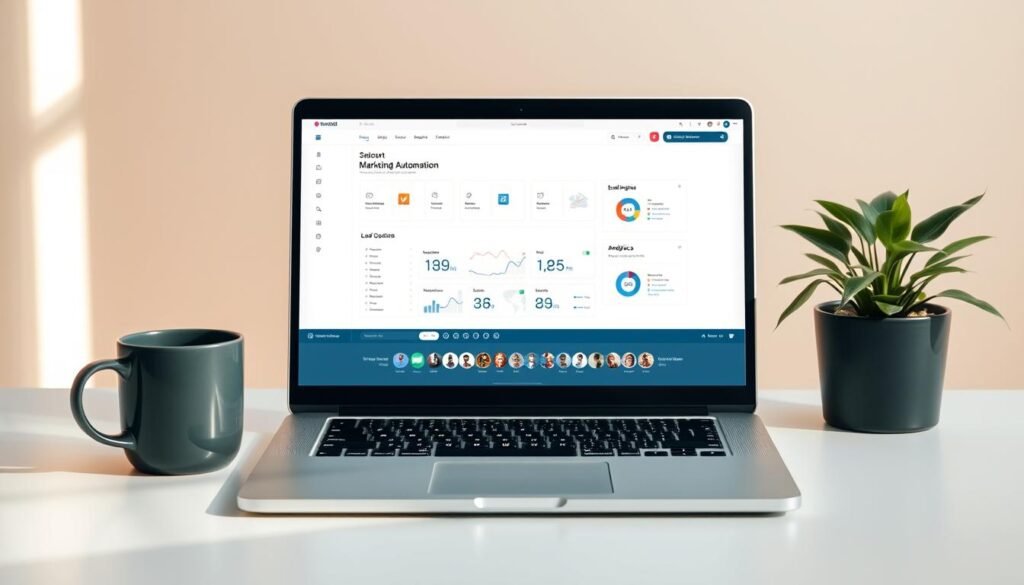
A clear automation map makes each marketing touch a deliberate step in a lead's journey.
Conditions, actions, and filters are the core blocks. Conditions trigger flows (Subscribed via, Link clicked, Landing page visited). Actions respond (Send message, Tag, Score, Copy/Move). Filters shape who proceeds (Lists, Consent, Splitter). Together, they form a repeatable process you can test and scale.
Start simple: the basic welcome flow is Subscribed → Send message. Then add a Wait step, check Message opened, and branch on Link clicked. Use Splitter blocks to A/B test subject lines or CTAs without muddying results.
Using tags and scores to personalize
Tag interests like visited_services or lifecycle stages like warm_lead. Scores quantify engagement over time and trigger higher-touch actions when thresholds hit. Implement consent filters to keep email lists clean and compliant.
- Leverage Visited URL and Landing page visited to trigger context-specific replies.
- Build modular workflows so you can copy or move contacts between processes.
- Document naming conventions and information flows to keep the system readable.
| Block | Common options | Quick action | When to use |
|---|---|---|---|
| Condition | Subscribed, Link clicked, Purchase | Start a flow | On a trigger event |
| Action | Send message, Tag, Score, Wait | Respond or update contact | After condition is met |
| Filter | Consent, Lists, Splitter | Limit or split traffic | To segment or test |
| Starter template | Welcome, Nurture, Re-engage | Deploy quickly | When validating a new offer |
Keep your first automation tight, then iterate. If you want real-world feedback and community tips, read this community review.
GetResponse best practices for freelancers
Start by deciding what a converted visitor looks like and work backward from that outcome.
Plan outcomes first. Define key results—booked calls, proposal requests, or paid trials—and map each journey stage to a workflow and an email touchpoint.
Plan outcomes first: map customer journey stages to workflows
Document the trigger, the goal, and the exit criteria for each flow. Keep one primary list, use descriptive tags, and add scores to surface hot leads.
Start small, then stack: modular automation you can expand over time
Launch a single outcome-focused sequence. Once metrics are stable, add re-engagement, upsell, and referral workflows.
- Use Splitters to test strategies before scaling.
- Standardize templates and email blocks for speed.
- Review dashboards weekly and pick one next step to test.
- Document each workflow’s goal, trigger, and exit to avoid overlap.
| Focus | Quick action | Why it matters |
|---|---|---|
| Outcome mapping | Map triggers → emails → goal | Aligns journey with measurable results |
| Tags & scores | One list + clear tags | Personalizes without complexity |
| Splitter tests | Run small A/B flows | De-risks changes and finds winners |
| Weekly review | Dashboard + one test | Maintains momentum and focus |
Qualify, score, and segment your leads for higher close rates
A clear scoring system lets you separate tire‑kickers from genuine buyers and act faster on real opportunities.
Define who you want and which behaviors signal intent. Document your ICP across industry, company size, budget range, decision roles, and urgency indicators. This helps you filter fit early and tailor messaging.
Defining your Ideal Customer Profile and high-intent behaviors
Assign points to high-intent behaviors such as downloading in-depth resources, attending webinars, repeated service page visits, and strong email engagement.
- Collect qualitative information fields (e.g., biggest challenge) to add context for consults.
- Segment your list by industry and company size so messages match constraints and opportunities.
- Track source performance by close rate and sales cycle to prioritize channels that deliver most value.
Lead scoring thresholds: cold, warm, and hot—what happens next
Effective lead qualification raises sales win rates by 43%. Use simple thresholds to trigger different follow-up motions.
| Score band | Range | Typical behaviors | Next action |
|---|---|---|---|
| Cold | 0–20 | Single download, low email opens | Light-touch nurture sequence; monitor engagement |
| Warm | 21–50 | Webinar attendance, calculator use, multiple page visits | Education flows and targeted content; invite to demo |
| Hot | 51+ | Repeated visits, high email clicks, request for proposal | Immediate booking page or direct outreach by sales |
Automate tagging on key behaviors (e.g., visited_pricing, downloaded_audit) so next actions are rule‑based. Maintain a simple sales notes process that feeds back into scoring calibration and content updates.
Reassess thresholds quarterly to reflect real conversion patterns from your journey data. Small tweaks keep the system aligned with which leads turn into customers.
Drive traffic with content and social media
Build organic momentum with well-optimized blog content, then amplify those pages through webinars and social posts.
SEO-generated leads close at about 14.6%. That makes publishing quality content worth the effort. Target commercial keywords and answer buyer questions better than competitors.
Optimize each blog with clear titles, meta descriptions, and internal links to services and landing pages. Add relevant CTAs and in-content forms or popups to capture leads from high-traffic posts.
Social, webinars, and partner amplification
Maintain a regular social media cadence to promote articles, magnets, and webinars. Use native formats—short videos, carousels, and threads—to increase reach.
Host topic-specific webinars and gate recordings to capture mid-funnel lead interest. Repurpose those recordings into posts and gated downloads to keep your website and landing pages working.
- Target keywords tied to commercial intent and publish authoritative content.
- Link strategically from high-traffic posts to offers to raise assisted conversions.
- Partner on co-authored content and reciprocal promotions to reach new audiences.
| Channel | Action | Goal |
|---|---|---|
| Blog | Optimize + internal links | Organic leads |
| Webinar | Live + gated recording | Mid-funnel capture |
| Social media | Native formats + cadence | Referral traffic |
Track organic conversion rate by page to focus on topics that move pipeline, not just traffic. Keep a quarterly editorial plan aligned to services and sales questions so your content drives measurable marketing outcomes.
Conversion optimization across site, pages, and emails
When page messages match visitor intent, conversion becomes a testable, repeatable outcome. Align each offer to a specific segment and show clear, quantifiable proof. Use logos and short case stats that answer "what will this do for me?"
Message‑market fit: aligning offers, benefits, and proof
Be precise. Map each service or magnet to one outcome and one target persona. Cross-link high-traffic blog posts to the right service page and magnet so readers find focused information and a single next action.
Form UX, page speed, and visual hierarchy that guide action
Reduce form friction: ask the minimum fields, group questions logically, and add privacy microcopy. Fast pages and clean mobile rendering preserve conversion rate and customer experience.
- Test headlines, CTA color, hero imagery, and social proof with Splitter experiments.
- Trigger contextual popups by scroll depth or exit intent rather than blanket interrupts — popups can add ~20% more leads.
- Measure the full funnel: a simple welcome automation is Subscribed via → Send message and then track booked calls, not just clicks.
| Element | Why it matters | Quick action |
|---|---|---|
| Landing page count | More pages raise relevance | Create targeted pages per offer |
| Form fields | Less is more | Cut to essentials |
| Page speed | Prevents drop-offs | Optimize images & scripts |
Ecommerce-style tactics freelancers can borrow
Treat your service funnel like a small ecommerce store: map user actions on your website to timed, intent-driven follow-ups that recover inquiries and increase repeat work.
Abandoned inquiry follow-ups and proposal reminders
Treat uncompleted contact forms or ignored proposals like abandoned carts. Trigger concise reminder emails within 24–72 hours and include a clear next action: reply, book, or approve.
Use Visited URL and time-based rules to detect high intent (pricing or proposal pages) and launch a short follow-up branch. Keep each branch to one or two messages to avoid fatigue.
Post-project upsells, cross-sells, and retention automations
After delivery, send a results roundup that highlights outcomes and suggests the logical next step—maintenance, a retainer extension, or a complementary service.
- Automate onboarding checklists and status updates to improve customer satisfaction and cut manual work.
- Send renewal nudges before retainer end dates with a simple path to extend scope.
- Score re-engagement actions (clicks on a new offer) so hot leads jump to a consult queue.
| Use case | Trigger | Quick action |
|---|---|---|
| Abandoned inquiry | Contact form left incomplete | Send 24h reminder email |
| Pricing revisits | Visited URL x2 in 7 days | Send targeted follow-up |
| Post-project | Project marked complete | Send results + upsell email |
Centralize these flows so website behavior, tags, and lists stay synced. Measure recovery rate on reminders and LTV lift from upsells to justify the steps and refine the process.
Measure ROI: metrics, dashboards, and next-step triggers

A clear dashboard turns marketing activity into actionable ROI signals you can act on this week.
Start by tracking KPIs across inbound and outbound channels. Focus on traffic by source, landing page conversion, cost per lead, qualified lead rate, booked calls, and closed‑won value. These numbers tell you where to invest time and budget.
Tracking sources, attribution, and funnel stage performance
Attribute leads to originating channels and pages so you can fund what delivers the clearest example outcomes over time. Use UTM conventions and consistent link naming to keep reporting clean.
Using split tests and analytics to iterate your processes
Use controlled Splitter tests to compare headlines, CTAs, and email sequences. Document winners, then roll them out. Track nurture impact by comparing deal size and close rate between nurtured and non‑nurtured segments.
- Monitor time-to-first-response and time-to-booked-call to spot bottlenecks.
- Create automation triggers: when a page’s conversion dips, notify yourself to test a new variation.
- Include short case metrics on pages and in email to shorten sales cycles and boost results.
| Metric | Why it matters | Quick action |
|---|---|---|
| Landing conversion | Directly ties to lead volume | Test hero + CTA |
| Qualified lead rate | Protects ROI | Refine targeting |
| Cost per lead | Budget allocation | Shift spend to top channels |
Conclusion
Close your playbook with a single, action-oriented plan that turns content and systems into predictable revenue.
Your owned website remains the backbone: it ties SEO, blog content, landing pages, list building, email automation, and proof assets into one conversion engine.
Use a platform that consolidates pages, media, automations, webinars, and analytics so you deploy faster and free up time to refine the parts that move the needle.
Focus on one improvement per week, keep short case summaries and testimonials visible, and maintain a simple, value-first email rhythm that nudges the next step for customers. Incorporating feedback from your audience will further enhance engagement, ensuring that their needs and preferences are prioritized. Additionally, exploring getresponse email marketing tips can provide valuable insights into optimizing your campaigns for better results. Regularly analyzing the metrics will allow you to fine-tune your approach and continuously improve customer satisfaction.
Start now: pick one workflow or landing page from this guide and launch it today—momentum compounds and leads follow.
FAQ
What key pages should my freelance website include to convert visitors?
Your site should have a clear homepage, services or pricing page, portfolio or case studies, a contact page with a lead form, testimonials, and a focused FAQ. Each page must highlight a single action—book a call, download a guide, or request a quote—and use trust signals like client results and measurable outcomes to boost conversion.
How do I match landing page messaging to different service offers?
Start by defining the audience and desired action for each offer. Align headline, value proposition, and CTA so the visitor sees the benefit instantly. Use short forms or multi-step capture when you need richer lead data, and test offer-message-page combinations to find the highest converting match.
What lead magnet formats work best for freelancers?
Practical assets that demonstrate expertise perform best: templates, checklists, audit reports, ROI calculators, and short case studies. Keep downloads actionable and tied to your paid service. Gate them with concise forms—ask only for information you will use to follow up effectively.
How should I sequence emails from welcome to booked call?
Use a short, focused sequence: welcome + deliverable, value-building message (social proof or case study), clear CTA to book a call, and a reminder for non-responders. Each email should contain one clear action and be brief, persuasive, and benefit-led.
Which automation workflows should I build first?
Start with three modular flows: a welcome/lead delivery workflow, a nurture sequence for prospects, and a re-engagement path for inactive contacts. Use simple conditions and actions to tag leads, move them between lists, and trigger booking or proposal reminders.
How can I use lead scoring and tags to prioritize outreach?
Define behavioral signals (page visits, downloads, email clicks) and assign scores for intent. Use thresholds for cold, warm, and hot leads to trigger actions: nurture emails for warm, sales outreach for hot. Tags help route leads by service interest, source, or campaign for personalized follow-up.
What elements increase landing page conversion rates?
Clear offer-message alignment, concise benefit-focused copy, prominent CTA, minimal form fields, fast load times, mobile-responsive layout, and trust signals (case studies, testimonials, results). A/B test headlines, CTAs, and layouts to refine performance.
How do I balance inbound content and outbound outreach?
Blend a steady inbound program—SEO-optimized blog posts, gated content, and social posts—with targeted outbound actions like personalized emails and proposal follow-ups. Inbound builds a long-term funnel; outbound accelerates revenue and validates messaging.
What copy frameworks help sell services without sounding pushy?
Use problem-agitate-solve, features-to-benefits, and social-proof-first frameworks. Lead with client outcomes, quantify results where possible, and end with a single, low-friction CTA. Keep tone consultative and focused on client value.
When should I implement A/B testing and analytics?
Begin testing once you have steady traffic or email sends. Prioritize headline and CTA tests on pages and subject line and CTA tests in email. Track conversion rate, click rate, and lead-to-client rate. Use results to iterate headlines, copy, and workflows.
What trust signals convert more freelance prospects?
Case study summaries with measurable outcomes, client logos, testimonials with specifics, portfolio samples, and transparent pricing or process pages. Also display response time, typical deliverables, and guarantee or revision policies to reduce friction.
How long should lead capture forms be?
Use the shortest form that still gives you the data needed to qualify prospects. For top-of-funnel magnets, email only or name + email. For high-intent offers, add one or two qualifying fields like project budget or timeline. Consider multi-step forms to increase completion.
Which metrics matter most for freelance marketing ROI?
Track lead volume, lead quality (conversion to proposal), cost per lead, conversion rate from lead to client, average deal size, and customer acquisition cost. Combine these into a simple dashboard to reveal which channels and content drive revenue.
How can ecommerce tactics improve freelance revenue?
Adopt abandoned inquiry follow-ups, proposal reminders, simple upsell products (retainer add-ons), and post-project retention automations. These tactics increase lifetime value and reduce churn by prompting repeat work and additional services.
What role does site speed and UX play in conversions?
Fast pages and clear visual hierarchy directly boost form completions and click-throughs. Optimize images, use mobile-first design, simplify navigation, and place CTAs where eyes naturally land. Good UX reduces friction and improves perceived professionalism.
How should I structure pricing and proposals to close more clients?
Offer clear packages with outcomes and timelines, include optional add-ons, and show ROI or case results tied to each tier. Use proposal templates that highlight process, deliverables, milestones, and payment terms to reduce negotiation friction.