

Curious whether you can design a high-converting landing page without coding or a developer? This guide shows you a clear, step-by-step path to launch effective pages that capture leads and sales. With the right tools and techniques, anyone can create a stunning landing page that resonates with visitors. This guide will also cover how to maximize landing page conversion strategies, ensuring that you turn traffic into meaningful interactions. Whether you're a business owner or a marketer, implementing these insights will help you achieve your goals more efficiently.
You’ll learn how to pick templates, edit content with a drag-and-drop editor, and publish fast with free hosting and SSL. The process covers headline choices, hero images, trust signals, CTAs, forms, and simple SEO like titles and meta descriptions.
We’ll also map goals—lead generation, product promotion, and click-through—so you choose the right structure and offer. You can connect analytics, pixels, and email lists to measure traffic and automate follow-ups.
By the end, you’ll run a quick QA checklist, publish confidently, and iterate based on real performance—no heavy tech skills needed.
Key Takeaways
- Follow a simple, goal-driven process from plan to publish.
- Use templates and drag-and-drop tools to speed setup.
- Focus on headline, hero image, concise copy, and a strong CTA.
- Connect forms to lists and add analytics for tracking.
- Publish on a secure host or your custom domain and test mobile responsiveness.
Why landing pages matter right now for beginners in the United States
A focused landing page turns an ad click into one measurable action. For new U.S. marketers this means faster wins: signups, sales, or click-throughs are tracked without changing your main site.
Dedicated landing pages let you match ad messaging to content. That alignment improves relevance, Quality Score, and conversion rates compared to sending traffic to a multi-purpose page.
Speed and clarity matter. Faster load times cut bounce rates and help ad efficiency. When indexed, a fast page can also aid organic visibility for narrow queries.
Use built-in SEO fields to set your page title and meta description. Free hosting and SSL make publishing safe and simple, while integrations with analytics give clear data on cost per lead.
- One goal per page makes A/B testing and attribution straightforward.
- Templates and a page builder speed setup for time-sensitive promos.
- A concise value exchange boosts list growth by removing distractions.
Plan before you build: goals, research, and assets

Start by locking in one measurable objective. Choose leads, sales, or a click-through. When you pick one outcome, your design, text, and calls to action all work together instead of competing.
Research what your audience actually says. Audit search queries, support tickets, and social threads to capture real objections and words to mirror in your copy. This raises relevance and trust.
- Analyze competitor trust signals: reviews, customer photos, partner logos, guarantees, and timers.
- Decide the exact value exchange (checklist, trial, webinar) and name your offer clearly in the headline.
- Select a template that matches your goal so you customize content instead of rebuilding from scratch.
Assemble a short asset list: headline variants, subhead, hero visual, testimonials, trust badges, CTA, and a privacy note near the form. Map which list new contacts join and which automation sends the follow-up.
GetResponse landing page builder tutorial for beginners
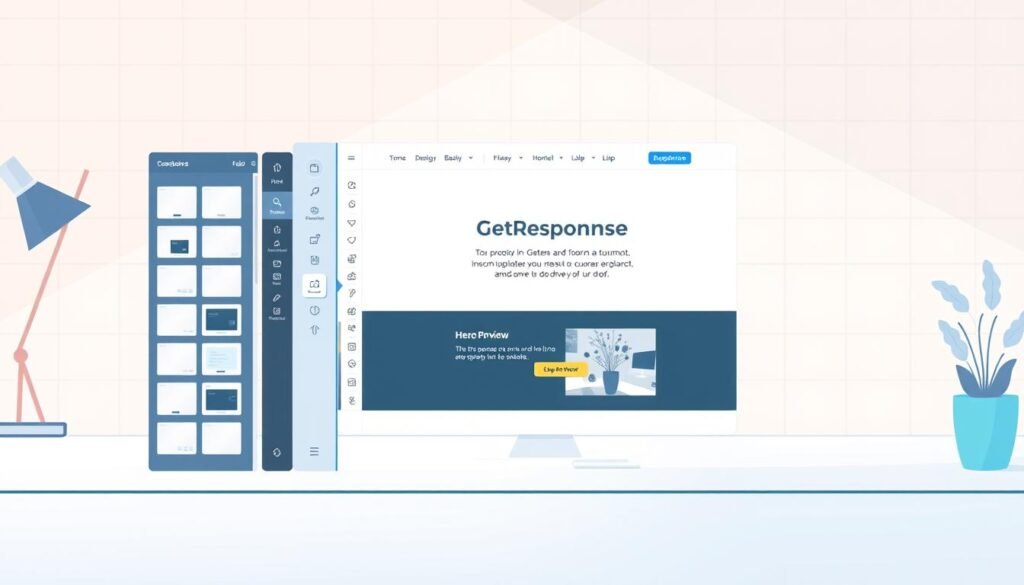
Start fast with a prebuilt template and jump straight into visual editing. In your account, go to Landing pages > Create landing page and click Use a ready-made template to speed production.
Choose Predesigned or Blank, filter by tags, then click Use template to open the drag-and-drop editor.
Customize sections, images, text, and design without coding
Use the visual editor to swap hero images, edit text blocks, and change brand colors and fonts. The page builder supports spacing, columns, and style tweaks so you keep control without code.
Add your signup form and route contacts
Add a signup form element, set required fields, and connect it to the right list so new contacts enter automation or CRM instantly. Configure validation, consent language, and a short privacy note to build trust.
Set title, meta description, and social preview
Write a clear page title and meta description that sell the benefit. Upload an Open Graph image so shares look professional. Insert trust cues—logos, testimonials, or a countdown for urgency.
| Action | Where | Why it matters |
|---|---|---|
| Pick template | Landing pages > Create | Saves hours; matches goal and structure |
| Open editor | Use template | Visual edits with drag-and-drop speed |
| Connect form | Form settings | Routes contacts to lists and automations |
| SEO & share | Settings > Meta | Improves search visibility and social previews |
Want real user feedback? Read a concise review and complaints to spot common setup pitfalls before you publish.
Choose where your landing page lives: domain, subdomain, and performance
Decide where your content will live before you publish. The choice between your own domain and a hosted subdomain affects trust, routing, and load speed.
Use a hosted subdomain to launch fast
Use a GetResponse-provided subdomain or connect your custom domain
Ship quickly on a provider subdomain like YourCompanyName.grweb.site when speed matters. That option removes server setup and gets your offer live in minutes.
Connect your own domain for brand control
Prioritize speed, free hosting, and SSL for trust and conversions
Assigning your custom domain requires DNS changes and verification. Confirm propagation before running paid ads to avoid downtime.
Performance tips:
- Use a short, descriptive URL and folder name for shares (e.g., promo.yourbrand.com/ebook).
- Compress images and limit scripts to improve load time and conversion rates.
- Free hosting plus SSL removes friction and shows the padlock users expect before submitting forms.
- Use a dedicated subdomain if you manage multiple offers to keep routing organized.
| Option | When to use | Pros |
|---|---|---|
| Custom domain | Brand consistency and SEO | Full control; trust signals; consistent URL name |
| Provider subdomain | Fast launches and tests | No DNS work; free hosting and SSL; quick publishing |
| Dedicated subdomain | Multiple offers and routing | Centralizes pages; keeps main site unchanged |
Track, integrate, and automate: analytics, pixels, and list management
Before you push traffic, connect analytics and pixels to capture accurate performance data. This step makes sessions and conversions measurable and ties ad spend to results.
Add your google analytics ID or a GTM container to record visitors, events, and conversions. Use events for button clicks, form submissions, and file downloads so the data maps to your offer.
Install retargeting pixels (Facebook Pixel or similar) to re-engage visitors who don’t convert on the first visit. Limit tags to only the scripts you need to keep the page fast.
Add forms, lists, and CRM syncs
Map the form to the correct list and confirm the automation workflow sends the welcome email or asset instantly. Push key contact fields to your CRM so sales can follow up with context.
- Standardize UTM parameters across ads and emails to simplify attribution in google analytics.
- Validate data capture: submit test entries and confirm information appears in the list and CRM.
- Document tracking IDs, tools, and workflow options so future pages clone cleanly.
| Action | Why it matters | Quick check |
|---|---|---|
| Add GA or GTM | Tracks sessions and goals | Confirm hits in real time |
| Install pixel | Enables remarketing | Verify pixel fires on visit |
| Map form to list | Automates onboarding | Test contact appears with full info |
Tip: Test end-to-end before publishing the getresponse landing page so your analytics and contact flows are reliable from day one. Additionally, consider reviewing potential getresponse navigation challenges explained in the platform's documentation or user forums. This can help you anticipate any issues your visitors might encounter, ensuring a smoother experience. Always prioritize testing various scenarios to confirm that your landing page performs optimally across different devices and browsers.
Test, publish, and optimize your new landing page
Launch readiness starts with simple tests: view on mobile, click every button, and submit a real form. These quick checks prevent basic failures that kill conversion.
Run a device sweep to confirm the new landing page looks correct on phones and desktops. Fix spacing and stacking issues before you push traffic.
Click-test every CTA, link, and phone number. Confirm each target and that click events record in your analytics.
- Submit the form with a real email and verify the contact lands in the right list and automation triggers the thank-you flow.
- Replace placeholder text and images; add required privacy copy and consent checkboxes.
- Set a clear page title and meta description so search and social previews match intent.
- Soft launch: low ad spend, validate data collection, then scale once metrics look healthy.
- Document any post-publish changes and re-test critical paths after edits. Plan A/B tests for headlines, hero visuals, CTA text, and form length.
Final step: schedule iterative tests and review results weekly so your new landing sustains conversion gains after each change.
Conclusion
Wrap up by turning this workflow into a repeatable system, so you reduce setup time and improve results with each campaign.
Define one clear goal, assemble assets, and use a template to create landing page assets fast. Wire analytics, add a signup form, and confirm the list and automation receive new contacts.
Keep trust signals strong: use your preferred domain or a provider subdomain, short clean URLs, and SSL. Simple design and concise text keep the new landing page looks polished and readable.
Clone successful sections in your account, tag contacts with campaign names, and iterate one step at a time. Test headlines, visuals, and CTAs so your marketing playbook compounds gains.