
You remember the first time a small sale felt like a win — and the quiet question that followed: how do I make this customer stay?
That moment is where strategy meets empathy. Good upsell cross-sell work turns a single purchase into lasting value without feeling pushy. It respects the person behind the order and adds helpful suggestions that fit their needs.
In this guide you’ll see how top tools align features to that goal. We’ll evaluate automation depth, segmentation, dynamic blocks, and analytics that link revenue to actions. You’ll get a practical playbook that targets key purchase moments: thank-you, shipped, and post-delivery windows.
Expect clear examples, performance benchmarks, and templates you can copy. Start with helpful content, then offer upgrades or complementary products. That approach lifts average order value and builds trust with customers while protecting your brand.
Key Takeaways
- Timely, relevant emails increase average order value without eroding trust.
- Automation, segmentation, and dynamic content are the tools that matter most.
- Target post-purchase windows like thank-you and post-delivery for best results.
- Measure outcomes with analytics that connect flows to revenue.
- Lead with education, use clear CTAs, and avoid pushy language.
- Try flows quickly using a trial to prototype before you scale.
Why upsell and cross-sell emails work right now in the United States
Right after a purchase, attention spikes — and well-timed outreach converts interest into value.
You reach customers when trust is fresh and intent is clear. A post-purchase message feels like service, not an interruption. That makes this period one of the highest-opportunity windows in retail and ecommerce.
From intent to action: Post-purchase timing, trust, and relevance
Leverage recency: customers check order updates and are open to helpful suggestions. Keep offers tightly related to the original purchase to avoid friction.
Keep messages simple. Use one clear call to action and a one-click path. Respect frequency and send when your audience typically opens email.
Proof points: Open, click, conversion rates and AOV lift you can expect
Benchmarks to target:
- Open rate ~61.7%
- Click rate ~9.7%
- Conversion rate ~9.16%
- Personalized sends can raise AOV by up to 28%
Segmented lists boost click-through by ~22%, which lifts downstream revenue. Test a thank-you note, an order-shipped suggestion, and a post-delivery check-in to find the best window.
Try this quickly: Test post‑purchase emails with GetResponse automations. Try it free for 30 days: https://www.getresponse.com/?a=MacDnqpGmR
How to evaluate tools for upsell and cross-sell success
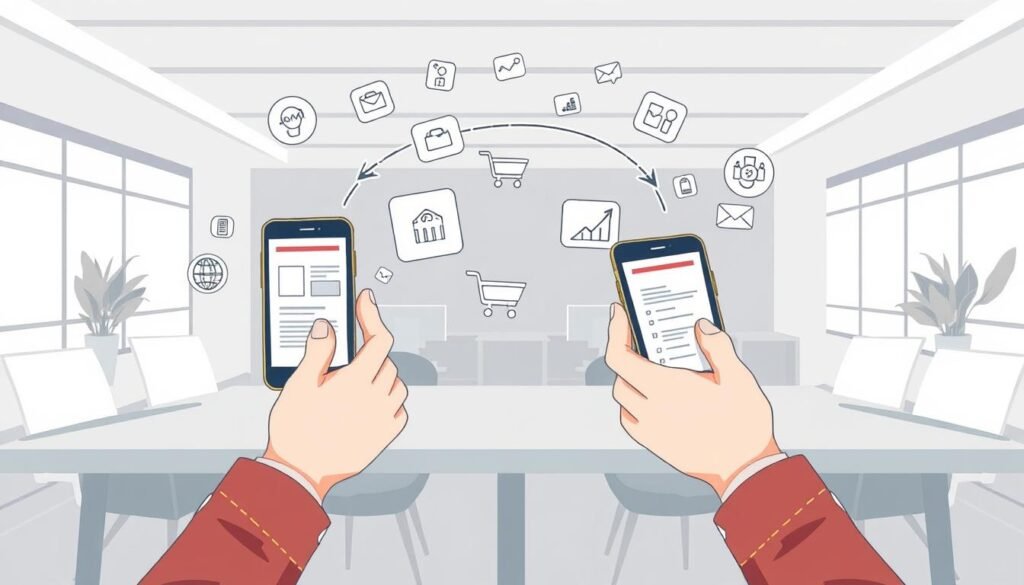
Effective tool selection starts with how well a system reacts to real customer events.
Look first at automation. Choose solutions that trigger on order placed, shipped, and delivered events. Branching logic should adapt flows when a customer opens, clicks, or buys.
Segmentation matters. Real-time segments based on recency, frequency, monetary value, browsing, and engagement let you match product suggestions to intent.
Dynamic content must swap blocks per segment so each recipient sees relevant products and content. Data unification is next—sync orders, catalogs, and attributes with low maintenance.
- Reporting depth: track open, CTR, conversion, and revenue per send with cohort cuts.
- Testing: native A/B for subject, layout, offer, and send time.
- Governance and deliverability: permissioning, warmup, sender reputation, and spam checks.
Factor in templates, playbooks, and total cost-to-value. If you want to test automation and reporting quickly, start a Free 30‑day GetResponse trial and prototype post-purchase flows. Also see an enterprise comparison for deeper information.
Email Marketing Platforms for Upsell and Cross-Sell Campaigns
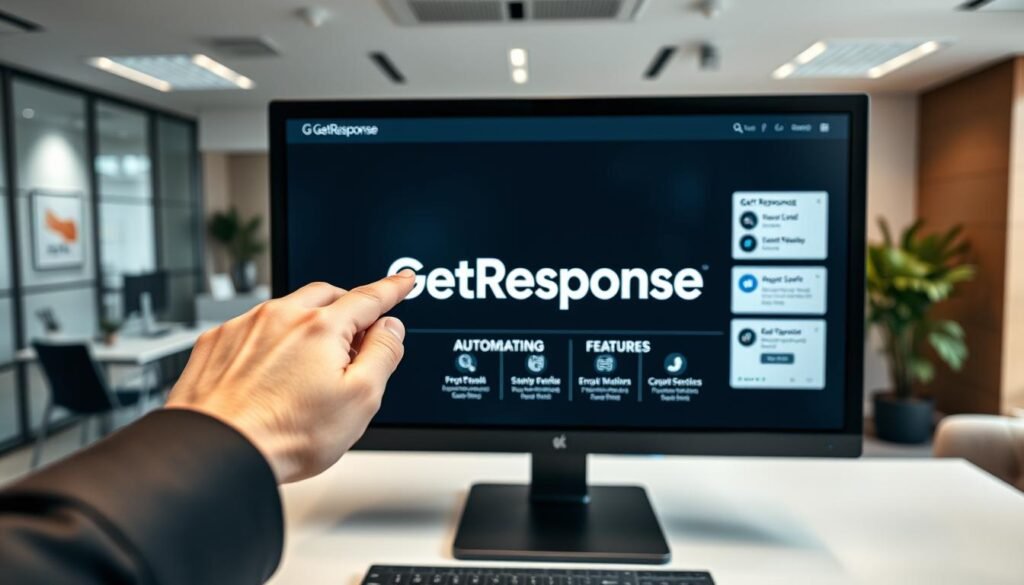
Choose tools that let you validate post-purchase ideas fast and with real revenue signals.
Below, concise vendor notes help you pick a starter stack and run live tests.
GetResponse — start here
Why try it: Build post-purchase automations, segment by behavior, and measure revenue per send quickly.
Try now: Launch a Free 30‑day trial to prototype thank-you, shipped, and post-delivery flows: https://www.getresponse.com/?a=MacDnqpGmR
Klaviyo + Fast Simon
Use built-in review and cross-sell flows. Fast Simon adds AI intent signals from search and browsing to trigger timely product recommendations.
beehiiv
Insert dynamic blocks that change products by segment. Full design control and autosubscribe magic links make newsletter-to-commerce moves easy.
Omnisend
Pair email with SMS to coordinate post-purchase outreach. Prebuilt flows and real-time segmentation speed setup. Support runs 24/7.
Choosing the right fit
- If you need deep ecommerce data and predictive segments, consider Klaviyo.
- If quick cross-channel execution matters, Omnisend shortens time to value.
- If content-led newsletters tie to commerce, beehiiv blends design with commerce blocks.
- Start tests fast with GetResponse Free 30‑day trial: https://www.getresponse.com/?a=MacDnqpGmR
| Vendor | Key strength | Post-purchase features | Best use case |
|---|---|---|---|
| GetResponse | Rapid automation & reporting | Behavioral segments, revenue tracking, templates | Validate flows and measure AOV lift fast |
| Klaviyo | Predictive segments + reviews | Built-in review flows, Fast Simon AI intent | Deep ecommerce personalization |
| beehiiv | Design control & dynamic content | Dynamic blocks, autosubscribe links, A/B testing | Content-led commerce and newsletters |
| Omnisend | Cross-channel orchestration | Email+SMS flows, real-time segments, ecommerce connectors | Coordinated post-purchase outreach at scale |
Set up campaigns that feel helpful, not pushy
Design every send to answer a need the buyer already has.
Design anatomy
High-performing emails share clear traits: short, benefit-led subject lines, a quick value statement, product visuals, and social proof. Keep subject lines tight—examples: "Elevate Your Experience" or "Complete Your Set".
Limit recommendations to 3–5 complementary products with prices. Add a rating or short review next to each item to build trust. Make CTAs obvious: one action per module and consistent color across the message.
Timing playbook
Sequence sends by real moments: thank-you immediately, order-shipped for accessory prompts, and post-delivery for setup tips plus a gentle upsell. Localize send times to when your customers open messages.
- Lead with help: tips, usage ideas, and short how-tos.
- Cap options to avoid choice overload.
- Test hero image versus product grid to find the best visual hierarchy.
| Element | When to send | Primary purpose |
|---|---|---|
| Thank-you note | Immediately after purchase | Confirm order, add a small helpful suggestion |
| Order-shipped prompt | When tracking updates | Suggest accessories tied to the shipped product |
| Post-delivery | 2–7 days after delivery | Offer setup tips, testimonials, and a gentle offer |
Implement quickly with ready-made blocks and templates. Spin up these templates in GetResponse with the Free 30‑day trial: https://www.getresponse.com/?a=MacDnqpGmR
Proven upsell and cross-sell email playbooks
A tight sequence that educates first will convert more without annoying customers. Start with a helpful note, then add short, relevant suggestions as trust builds.
Upsell sequences
Upgrade nudges work best after entry-tier purchases. Send a benefit-led upgrade, then a feature comparison, and finally a limited-time incentive if needed.
- Email 1: thank-you + essentials and quick value statement.
- Email 2: feature comparison showing gains from upgrading.
- Email 3: social proof and a timed incentive (if conversion lags).
Cross-sell sequences
Pair the original product with 3–5 complementary items. Schedule suggestions at order-shipped and post-delivery to match real needs.
Personalization at scale
Use RFM, browsing history, and life-stage signals to rank targets. Prioritize high-R/F/M for premium upgrades and re-engage low-R with fresh additional products.
CTA ideas that convert without pressure
Use clear, helpful CTAs: “See what fits your setup,” “Try the pro features,” or “Add essentials to your order.” Limit choices and emphasize availability.
| Example email | When | Primary purpose |
|---|---|---|
| Thank-you + essentials | Immediate | Confirm purchase, suggest 1–2 items |
| Use-case tips + accessory | 2–4 days after delivery | Help setup, suggest complement |
| Upgrade benefits + social proof | 7–14 days | Drive upgrade to higher tier |
Build these flows in minutes with the GetResponse Free 30‑day trial: https://www.getresponse.com/?a=MacDnqpGmR
Measure, test, and optimize for higher AOV and CLTV
Start with clear metrics so every test ties to real buyer behavior.
Focus on impact: analyze open rate for subject effectiveness, click-through rate for engagement, conversion rate for sales impact, and revenue per email to measure financial contribution. Tag each send so purchases map back to the exact sequence that drove the sale.
Key metrics to track
- Open rate — subject line and sender trust.
- CTR — content and offer engagement.
- Conversion rate — direct sales influence.
- Revenue per email — the true monetary lift.
Business KPIs
Set KPI targets for AOV, retention rate, and customer lifetime value. Watch cohort trends to see if helpful post-purchase content raises repeat purchase behavior.
A/B testing roadmap
Test one element at a time. Start with subject lines, then layouts (hero vs. grid), product placement, and send timing. Use KPIs — not vanity metrics — to pick winners.
- Compare offer framing: “bundle and save” versus “try pro free” and judge by conversion and revenue.
- Segment reports by RFM tiers, new vs. repeat customer, and product category.
- Guard deliverability: monitor complaints, unsubscribes, and send rate limits.
| Action | Primary metric | Goal |
|---|---|---|
| Subject line test | Open rate | Improve opens without hurting CTR |
| Layout test | CTR | Raise engagement to boost conversions |
| Offer framing | Conversion rate & revenue per email | Maximize incremental money per send |
Operationalize wins: roll successful variants into evergreen sequences and automate dashboards to surface results. If you want to prototype quickly, implement testing and reporting with a Free 30‑day GetResponse trial: https://www.getresponse.com/?a=MacDnqpGmR
Conclusion
Make the final step count: helpful follow-ups turn one purchase into ongoing engagement.
Prioritize helpful service and clear value so customers feel guided, not pressured. Use focused examples—Quizlet’s single-purpose upsell email and Dollar Shave Club’s curated cross-sell email examples—to keep choices small and easy. Incorporating these strategies can significantly enhance customer experience, leading to higher engagement and retention rates. Leveraging the best email marketing platforms allows businesses to automate and personalize their communication effectively, ensuring that customers receive relevant offers that resonate with their needs. By doing so, companies can foster trust and loyalty, ultimately driving sales and encouraging repeat purchases.
Tie suggestions to recent product use and browsing history. Add brief testimonials by items to boost perceived quality and reduce friction. Templetize winning flows, then scale where they move average order value and long-term loyalty.
FAQ
What makes upsell and cross-sell emails so effective right now in the United States?
They tap intent and a short window of high purchase probability. Post-purchase and post-delivery moments have higher trust and attention. When offers are relevant and timed within 24–72 hours, brands typically see better open and conversion rates and meaningful lifts in average order value (AOV).
When should I send post-purchase upsell or cross-sell messages?
Time matters. Best windows are immediately after checkout (order confirmation), when the order ships, and 3–7 days after delivery. Each touch serves a purpose: immediate offers leverage momentum, shipping updates reduce anxiety, and post-delivery messages invite repeat use and complementary purchases.
Which features are must-haves when evaluating tools for these campaigns?
Prioritize automation workflows, behavioral segmentation, dynamic content insertion, real-time product recommendations, and robust reporting. Also look for ecommerce integrations, A/B testing, and lifecycle triggers so you can scale personalized offers.
How do I choose between platforms like GetResponse, Klaviyo, Omnisend, and others?
Match the tool to your stack and goals. If you need tight automation plus a trial, GetResponse is strong. Klaviyo excels at product-review and AI-assisted intent flows. Omnisend combines email and SMS for omnichannel follow-up. Evaluate data sync, pricing, and available ecommerce connectors.
What content structure converts best in upsell and cross-sell messages?
Use concise subject lines that signal value, a clear one-line value prop, product visuals, bold price or benefit cues, social proof (reviews or ratings), and a single dominant CTA. Keep copy short and action-focused to reduce friction.
How should I personalize at scale without manual work?
Use RFM (recency, frequency, monetary) segmentation, past browsing and purchase history, and lifecycle stages. Combine these with dynamic product blocks and recommendation engines so the platform fills offers automatically based on each customer’s profile.
What metrics should I track to prove ROI from these campaigns?
Track open rate, click-through rate (CTR), conversion rate, revenue per email, AOV, retention, and customer lifetime value (CLTV). Tie channel attribution to revenue so you can quantify incremental dollars from upsell and cross-sell flows.
How often should I A/B test offers and creative?
Test continuously but in small, controlled batches. Prioritize subject lines and offer types first, then layouts and timing. Run tests long enough to reach statistical confidence—typically a few thousand impressions or at least one business cycle for your store.
Can combining SMS with email improve cross-sell performance?
Yes. Adding SMS for transactional and time-sensitive follow-ups increases immediacy and conversion. Use SMS sparingly for urgency and email for richer product detail. Omnichannel sequences often raise conversion and shorten purchase cycles.
What are low-risk offer types that still lift AOV?
Try percentage discounts on upgrades, bundled discounts for complementary items, free-shipping thresholds, and limited-time add-on pricing. Framing offers as helpful enhancements rather than hard sells preserves trust and boosts uptake.
How do I avoid coming across as pushy or spammy?
Respect frequency caps, make every message clearly valuable, and segment to only show relevant offers. Use helpful language, transparent pricing, and social proof. Provide easy opt-down options so customers can reduce cadence without leaving entirely.
Are there proven playbooks for specific verticals like DTC or SaaS?
Yes. DTC brands often use complementary product bundles, replenishment reminders, and post-delivery offers. SaaS upsells favor time-limited trials, feature highlights, and usage-triggered upgrade nudges. Adapt cadence and creative to the buying cycle.
How much lift can I expect from a well-executed upsell or cross-sell flow?
Results vary, but well-timed flows commonly boost AOV by 10–30% and can raise conversion rates on follow-up messages to 3–8% depending on list quality and offer relevance. Measure incremental revenue to validate performance for your business.
What legal or deliverability considerations should I keep in mind?
Ensure compliance with CAN-SPAM and TCPA when using email and SMS. Maintain list hygiene, authenticate sending domains (SPF, DKIM, DMARC), and monitor engagement metrics to protect sender reputation and inbox placement.
How can product reviews and testimonials be used in these messages?
Insert short, specific reviews near the product CTA to reduce purchase friction. Use star ratings in subject lines or preview text to increase opens. Authentic social proof raises trust and nudges conversions more than generic claims.
What role does pricing psychology play in offer construction?
Use anchoring, decoys, and scarcity ethically. Show original price next to the upsell price, offer small add-ons with high perceived value, and highlight stock or time limits only when truthful. These tactics increase perceived value and conversion.
How do I integrate recommendations with my ecommerce catalog?
Use platforms that support real-time product feeds and API-level sync. Implement recommendation rules (best-seller, frequently bought together, personalized) and test which rule types drive the highest click-to-purchase rates.
Which additional contenders should I consider beyond the major vendors?
Consider tools like Campaign Monitor for design simplicity, ActiveCampaign for CRM-led automations, and Sendinblue for combined transactional messaging. Choose based on feature fit, scale, and total cost of ownership.